Recycling and Sustainability at Maida Vale Skip Hire
Welcome to our sustainability statement for Maida Vale Skip Hire. We are committed to being a leader in eco-friendly waste disposal and sustainable rubbish solutions across Maida Vale and the surrounding boroughs. Our approach combines practical on-the-ground collection with strategic partnerships, low-carbon transport and a clear recycling performance goal. We treat every skip as a resource: materials are separated, assessed and routed to the best destination to avoid landfill wherever possible. This page explains our targets, local transfer networks, charity partnerships and the low-emission vehicles that make responsible skip hire in Maida Vale possible.Our local services are designed to align with borough-level waste separation programmes. Working closely with Westminster's recycling principles and neighbouring borough guidance, our teams encourage separation of food waste, dry recyclables and glass at the point of collection when feasible. Maida Vale skip hire is about more than removing rubbish — it's about protecting local air quality, lowering carbon and supporting a circular economy in North West London.
 We set an ambitious recycling percentage target to measure progress and drive continuous improvement. Our current objective is to recycle or divert 75% of all material collected from skip hire services by 2028. To reach this target we operate a transparent sorting and reporting process that prioritises reuse and recovery. Key performance areas focus on reducing contamination in mixed loads, increasing reuse of salvageable items and ensuring hazardous or restricted materials are handled safely by licensed facilities.
To make these processes effective we rely on local transfer stations and material recovery facilities (MRFs). We routinely transfer sorted loads to borough transfer hubs and regional MRFs that specialise in cardboard, mixed paper, glass and metals. These local transfer stations support efficient routing to recycling processors, soil treatment facilities for green waste and concrete crushing plants for hardcore recycling. By keeping material flows local where possible we reduce vehicle miles and the carbon intensity of disposal.
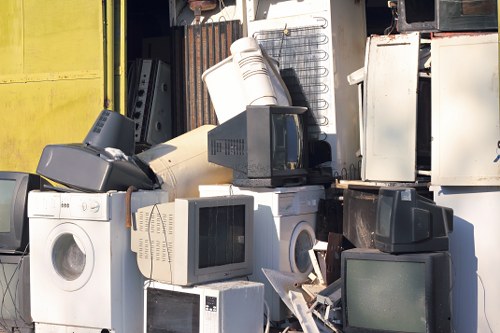
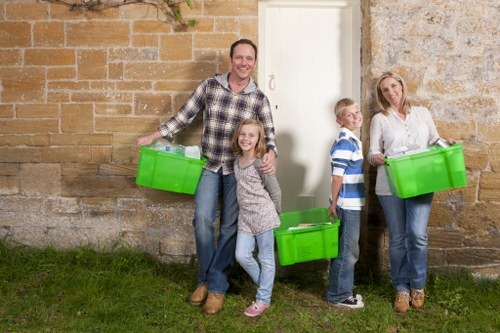 Partnerships with charities and community reuse organisations are central to our sustainable rubbish strategy. Maida Vale skips often contain reusable furniture, appliances and construction materials that can be salvaged — rather than shredded or buried. We work with accredited local charities and social enterprises to divert good-quality items to people in need, support refurbishment schemes and supply materials for community projects. Our policy is to offer salvageable contents for donation before onward recycling, increasing social value while reducing waste.
Below are practical elements of our eco-friendly waste disposal programme:
- Recycling percentage target: 75% diversion by 2028 with annual reporting and incremental improvement plans.
- Local transfer stations: regular routing to borough transfer hubs and MRFs to maximise local processing and reduce haul distances.
- Charity partnerships: formal agreements to recover reusable items for social benefit and refurbishment.
- Low-carbon vans: a growing fleet of electric and hybrid vans for short urban collections, supported by route optimisation.
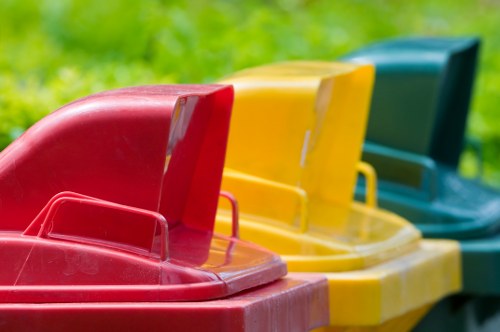
Operationally, our crews follow clear on-site segregation practices that reflect the boroughs' approach to waste separation — dry recycling streams (paper, card, plastics), glass, green garden waste and a separate line for mixed inert materials from construction. For larger projects such as renovations in Maida Vale flats or shop refits, we offer segregated skips or multi-compartment containers to reduce cross-contamination and speed up downstream processing.
Low-Carbon Fleet and Route Efficiency
Our transport strategy is focused on cutting emissions at source. We deploy a mix of electric light vans for local collections and low-emission Euro 6 or hybrid vehicles for heavier transfers to MRFs and transfer stations. All routes are optimised using scheduling software to minimise empty runs and clustering of jobs in the same postcode sectors. This fleet approach supports the boroughs' air quality goals while delivering reliable skip collection services. We also operate targeted initiatives to reduce contamination and improve recycling yields: signage on skips that clarifies accepted materials, on-call guidance for site managers, and periodic waste audits for large clients. Education is part of the package — when customers understand what belongs in each container, recycling rates improve and processing costs fall. Maida Vale waste services aim to be both practical and instructive, helping builders, householders and landlords make correct disposal choices.
Monitoring and transparency underpin our sustainability commitments. We publish annual summaries of tonnages diverted, recycled and sent for recovery, and we undertake regular third-party checks of our waste streams. Internally we measure carbon performance in tCO2e per tonne of material managed and set reduction targets year-on-year. This allows skip hire Maida Vale customers to see the environmental benefits of choosing well-managed, localised services.
We continue to expand collaborations with local councils, transfer stations and charity networks to strengthen the local circular economy. By prioritising reuse, working with licensed material handlers and investing in low-emission collection vehicles, our sustainable rubbish area services reduce landfill dependency and bring measurable community benefit. For anyone arranging skip hire in Maida Vale, our promise is clear: practical, traceable and greener waste removal that supports borough waste separation strategies and helps build a more sustainable neighbourhood.
Maida Vale Skip Hire remains committed to continuous improvement — meeting regulatory standards, hitting our recycling targets and improving air quality through lower emissions. Together with local partners and responsible customers, we are turning waste from construction, clearance or renovation into resources for the future.